"If you want your children to be intelligent, read them fairy tales. If you want them to be more intelligent, read them more fairy tales." Albert Einstein

Showing posts with label homework.. Show all posts

24 March 2013

Cataloging

Tarulli brings up a topic I have discussed in previous posts: how to catalog graphic novels.  She brings up a good point in that the person who catalogs the graphic novels is usually in the technical services department and does not see how the cataloging plays out on the shelves: "Technical services staff ... are faced with a number of choices that are often made without the benefit of collaborating with the selector or resident expert. When this occurs, catalogers turn to existing cataloging practices and rules, and their own expertise, to create a uniform level of cataloging that will provide access."


Because the graphic novel collection, rather than being a passing fancy or trend in the library world, has exploded into a cataloging nightmare, many libraries are forced to consider alternatives to housing all the graphic novels in the 741s.  In addition, many patrons now come to the library, not to find one specific book title, but to browse titles in the same way they might at a bookstore.  Some libraries have gone so far as to remove Dewey from their systems altogether and to reclassify the books by general topic, making it easier for readers to browse among their interests.

The question that naturally surfaces, then is this: do we continue to shelve graphic novels in their own section, regardless of genre or topic, or do we integrate the graphic novels, shelving travel narratives with other travel narratives, and graphic Romeo and Juliet near the original Shakespeare play?


How you answer this question depends on your approach to readers advisory.  If you would want people who are interested in World War II, for example, to have access to The Diary of Anne Frank, Code Name Verity, and Maus all at the same time, it would make sense to integrate the graphic novels into the rest of the collection.  As we have mentioned many times in class, graphic novels are a medium, not a genre.

But what about those readers who want only graphic novels?  Would integrating the graphic novels into  the rest of the collection make things more difficult for graphic novel aficionados?  Would the circulation statistics suffer and the library lose some of its patrons because they cannot find what they like?


Somehow I doubt it. I have observed that people who enjoy graphic novels do often enjoy a variety of genres within that medium, but many people who read graphic novels read one particular genre, just as many people who read print works prefer one particular genre.  In this case, separating the graphic novels into their respective genres would make things easier for the enthusiasts, as they would not have to sort through the graphic novels whose topics or genres do not interest them.  In this case, though I would definitely recommend that the library consider switching from a "nonfiction by Dewey, fiction by author" method of delivery to BISAC or METIS, either of which would be easier and more navigable for all patrons and would likely increase circulation of all materials, not just graphic works.

17 March 2013

Meta-comics and Webcomics

Thorne posits that librarians have an obligation to collect web comics with the same frequency that they  collect works in other media: "A large body of work on the Web ... holds interest for library patrons. Librarians have long accepted a responsibility for seeking out and evaluating resources on the Internet for the benefit of their patrons, and for making their discoveries available in digital subject bibliographies, or pathfinders." I couldn't agree more.  I believe that librarians should collect information sources from a variety of media and be sure to include web comics or other internet sources in their pathfinders or read-alike lists, in addition to keeping lists of web comics themselves (lists that should probably be checked frequently to make sure the links are still functional and accurate).


Many new comic artists are taking advantage of the ability to self-publish via the internet, in the same way many authors choose to self-publish their novels. This allows the comic artists to gain a following and possibly seek professional publication if it is desired. Thorne mentions that this also allows the artists to avoid the "editorial control" of syndication, providing more freedom of expression for the artist.  As the web has exploded and its use has expanded from only the technologically elite to even preschoolers at the public library, so have the genres of web comics  to the point that Thorne posits that some web comics defy a specific genre classification.


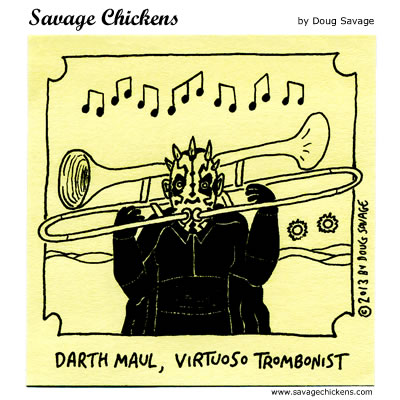
I am constantly amazed by the variety of styles employed in web comics.  One of the comics I follow regularly, Savage Chickens, consists of pen and ink chicken caricatures drawn on Post-It notes.  Some of the cartoons on this site deal with sci-fi themes such as Star Wars or Star Trek, but many of the cartoons are simply funny scenes involving the chickens or their friend Timmy Tofu.  Another comic I follow is Surviving the World, which features a man in a lab coat standing next to a blackboard. Each day there is a different message on the blackboard.  The Brick Side, a comic created by a friend of mine, contains a photo of a scene created with LEGO bricks, often embellished with thought or speech bubbles. One blog I found recently features stories about being a parent of small children and is illustrated with pictures that appear to have been drawn in the Microsoft Paint program, and the pictures are intentionally "crappy" (the author's word, not mine).


I appreciated Thorne's list of resources and clearinghouses for web comics. At this point in our class, I think it goes without saying that web comics are created for a variety of audiences and that we should recommend them as appropriate to anyone who could be interested in the subject matter. Thorne posits that "a library with any kind of a graphic novel collection should not be neglecting webcomics." Thorne is half-right.  All libraries should avoid neglecting webcomics, regardless of their graphic novel collection.

03 March 2013

Graphic Novels: Nomenclature and Aesthetics

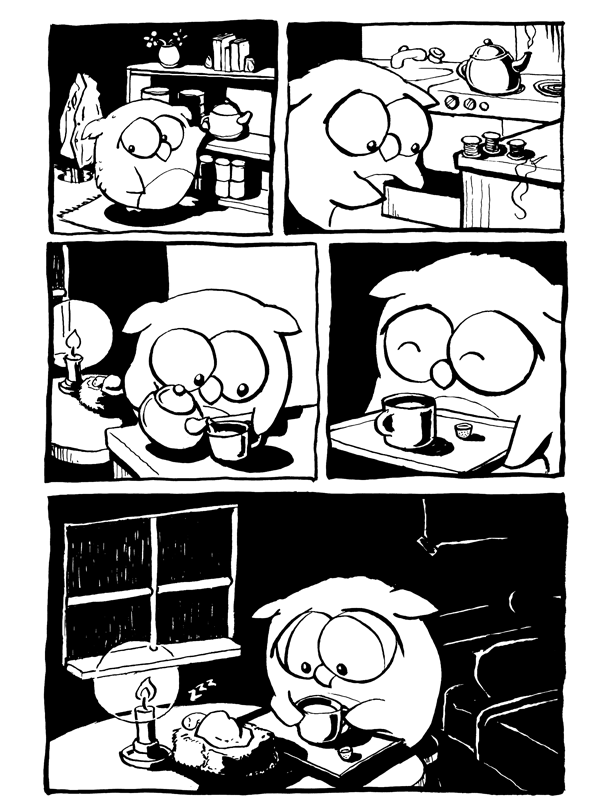
I was glad to see that Stegall-Armour took issue with the name “graphic novel,” implying that the name does not properly encompass all that a graphic novel is. Also, the term “graphic,” to the unenlightened, implies that there is something extreme and negative about the work, when indeed the graphic novel might be written for children and contain nothing inappropriate whatsoever (like the Owly books). I agree with Stegall-Armour that if graphic novels are to be shelved in their own separate section, they should then be sub-categorized by genre. The term “graphic novel” really refers to a format/medium and not a genre, and Stegall-Armour is right that Maus should not be shelved next to Spiderman. Yes, they are both graphic works, but the genres of each are quite different. Perhaps this is why I have been frustrated when trying to find graphic novels I’d be interested in – they are all shelved in one location, and I have to sift through things that I’m not interested in just to find books I might like. If the nonfiction graphic novels were shelved in nonfiction, the science fiction graphic novels in the sci-fi section, etc., perhaps with a colored sticker or label on the spine to indicate their format, then I’d be able to find things I’d like.


I enjoyed and appreciated Stegall-Armour’s discussion of librarians’ views of graphic novels. I was hoping that Stegall-Armour’s study would conclude that librarians are in favor of graphic novels and think of them as more than “glorified comic books.” Stegall-Armour surveyed librarians at a public library, in a variety of library positions, regarding their views of graphic novels. Most of the librarians defined graphic novels with a variety of words and also readily admitted that graphic novels are appropriate for all ages, even though they seem to be most popular with adolescent males. I thought it was interesting that Stegall-Armour observed the librarians speaking against graphic novels, but that these same people gave very different answers when they were surveyed. It is possible that they librarians gave the answers they thought Stegall-Armour would want, rather than a response that reflects their beliefs, but Stegall-Armour also had a good point: “As a general rule, librarians respect information in all formats, functions, and types. The librarian’s job is to protect and provide information, not to oppress and suppress it.”


I thought it was interesting that Stegall-Armour brought up the idea of using graphic works as a bridge, not a stepping stone, to allow students who are not interested in reading print works to participate in classroom learning and discussion. I agree that graphic works can enhance the learning of students, in the same way that using any other teaching method, like acting out a story, creating art about the story, or building a LEGO construction about the story, can help students to become more interested in the print material being discussed. I would have no issues with a teacher choosing to teach a graphic novel in a classroom any more than I would with a teacher who chose to use Shakespeare’s works or a current popular novel. In fact, using a variety of methods and media will help the teacher (or librarian) reach a wider audience.


24 February 2013

Graphic Novel Audiences


I enjoyed the articles in Weiner’s book this week, especially considering my e-discussion of graphic novels last week. It is true that graphic novels have a fairly stereotypical audience; however, it is also true that as librarians we would be doing a disservice if we did not recommend graphic novels to all of our patrons. I appreciated Boyer’s mention of the groups who do not typically read graphic novels: adults, particularly senior citizens, parents who regard graphic novels as “less than,” teens who believe that only certain types of teens (geeks, nerds, however you want to name them) read graphic novels, and most importantly, librarians.

Boyer’s position that librarians should be familiar with all of the different media and materials available in the library is a valid one. This is precisely why I am taking this class. I don’t know enough about graphic works, nor am I comfortable/familiar enough with classic graphic novels or newly published and popular graphic novels to do an adequate job advising readers. Eventually, I will work at a library, and hopefully I’ll have a cadre of regular patrons who can offer suggestions on what I should read next. Until then, though, I must rely on my classmates and the internet to define my “to read” list. 


Gavigan also made some good points about using graphic novels to reach reluctant readers, particularly adolescent males, who have been shown to read significantly less than their female peers. Although the idea of using a graphic novel as a “stepping stone” into another medium has already been hotly debated in our class, I see no problem with suggesting a graphic novel to a reluctant reader if, in the librarian’s opinion, that reader will engage with or enjoy the graphic novel better than a traditional print novel. The librarian does not need to have a “hidden agenda” of encouraging the patron to read print novels; rather, the librarian is simply meeting a need for a patron, regardless of the outcome. Perhaps that patron will eventually read other types of books; perhaps s/he will continue to read exclusively from the graphic novel /comic medium.

I appreciated the idea of suggesting graphic novels alongside other books; for example, suggesting Marvel’s Oz books alongside other fantasy novels, or adding Persepolis to a list of memoirs / autobiographies. In the future, when I am responsible for book displays in the library, I will make a point to include graphic works in addition to traditional print works, the same way I would attempt to include both fiction works and non-fiction works in a display. While it may be true that graphic novel aficionados will generally prefer to read other graphic works, and print novel fans will prefer print works, it is also true that offering a variety of media and a variety of genres is part of the appeal of the public library, in addition to the benefit of being able to try something completely new without having to pay for it. Jimmy John’s may offer free smells, but the library offers free adventures, both familiar and brand-new.

17 February 2013

Biographical and Autobiographical Graphic Novels

This week for our class we were required to read Satrapi's Persepolis. Persepolis is Satrapi's memoir of growing up in Iran, which I have found intriguing because I have very little familiarity with Middle Eastern countries and customs.  I think that having graphic novels about different cultures is a great way to present information that people might otherwise be interested in or exposed to.  Although things are improving, there is a dearth of children's and young adult works featuring characters from the Middle East, and in our increasingly global community, this is to our detriment.


My first foray into graphic biographies, though, came through Art Spiegelman's Maus. Maus was my first introduction to graphic novels in general, and especially to non-manga graphic works. I taught on the island of Guam, so my students hailed from Korea, China, Japan, the Philippines, Thailand, and a host of small Pacific islands; they frequently brought manga to class and flew through it so fast I wished I had a manga version of our grammar textbook.  But these works were all in Japanese (or Chinese, or Korean, etc.), so I had little to no exposure to graphic novels of any other variety.


Then I found out about Maus and how controversial it was and how wonderful some people said it was, so I ordered a copy.  I'm not a history buff by any means, but the second world war does interest me, so it was easy enough to step into the world of Maus. I believe, though, that I became a bit overwhelmed by the combination of words, pictures, and difficult subject matter.  I enjoyed the book and added it to my classroom shelf, but I didn't pick up another graphic novel for quite some time.


My other experience in graphic biographies or autobiographies has come through Alison Bechdel's Fun Home. I was required to read this book for a class last semester, and I was greatly surprised when I went to Barnes & Noble to purchase it, only to have the clerk retrieve the book from the biography/memoir shelf, not the graphic novel/comics shelf.  I enjoyed most of the Fun Home story, aside from the literary references that made my English-teacher self feel like a complete dunce. I could easily see how Bechdel, who is famous for her comic strip Dykes to Watch Out For, would choose to write her autobiography in graphic novel form.

It makes sense to me that libraries choose to shelve serial graphic novels in a separate section, but I wonder whether it would make more sense for graphic biographies and autobiographies to be shelved with the other biographies. Would this promote reading across a variety of media for patrons, or merely create frustration for those who prefer graphic works and wish for them to be placed separate from the rest of the collection? After reading about libraries that are "genrefying" their collections or doing away with the Dewey decimal system altogether, I wonder if it would be easier to shelve graphic works according to their genre instead of their medium.  Any thoughts?

10 February 2013

Introducing the New Spiderman

I enjoyed the three Spiderman movies back when they were first produced. Although Peter Parker was occasionally annoying, and MJ definitely got on my nerves, the stories were fun and they always ended well. I had the same experience with the older Spiderman comic books we've read for class.  I enjoyed them, somewhat, but they didn't cause me to race to the local comic book store to purchase the rest of the series.  I was okay with Spiderman, but I could easily take him or leave him.


Introduce Miles Morales, the new Spiderman in the wake of Peter Parker's demise. Miles Morales is night-and-day different from Peter Parker.  Miles is half African-American and half Latino; Miles lives in a poor neighborhood and wins a lottery to go to a charter school.  For a while there were rumors that Miles would also be gay.

I'm surprised I haven't heard any uproar over this, like the uproar that happened when Kevin Keller entered Archie comics. Kevin's wedding caused quite an uproar, so much so that it ended up as the highest selling individual issue of Archie comics.


I read Kevin's story, too, although the Archie characters are far too cheerful and caffeinated for my preferences. I don't think I'd enjoy that series, regardless of the diversity presented by the characters.I definitely preferred Batwoman's story to Kevin Keller's.  Batwoman is interesting, and her story is one I'd actually enjoy following, were I into superhero comics.


It seems that more comics are introducing LGBTQIA characters now, and they are facing less opposition, too. Marvel's Northstar was able to marry his partner, Kyle, in 2012 without causing much ripple, although Northstar's 1992 coming-out experience was much less positive.


There have always been LGBTQIA comics, although more often than not these were written by and for the LGBTQIA community.  It's only recently that LGBTQIA characters have made headway into mainstream comics. In response to the brouhaha over such characters appearing in superhero comics, Perry Moore wrote a novel, Hero, which one a Lambda award for excellence in young adult LGBTQIA literature. I listened to Moore's novel on CD in my car, and I found myself staying in the car, even after I had reached my destination, just to finish the story.

Hero's main character is Thom, a boy whose mother disappeared years ago and whose father used to be a superhero's sidekick until an accident left him with a damaged hand and a tarnished reputation.  Now Thom has realized that he has a superpower - he can heal people with his touch - and he has been recruited by the League to become a superhero-in-training. He has to hide this from his dad, though, who doesn't want him to have anything to do with superheroes.  The ending of this story is intense, as a plot twist causes Thom to risk everything to save the day.  It's definitely well worth your time to read (or listen to) this book.


And if you are interested in other LGBTQIA comic book characters, check out this article.

03 February 2013

Superheroes


Wikipedia defines a superhero as “a character possessing ‘extraordinary or superhuman powers’” who uses those powers to fight evil. Some of the more famous superheroes will have a standard set of supervillians they fight; these supervillians may be beaten, only to return later for another attempt at beating the superhero. A superhero story follows a fairly standard plot: the superhero lives incognito, working a regular job, until some big, scary, bad thing happens and the hero is called upon to save the day. The hero and the villain have a battle of epic proportions, usually involving a lot of damage to buildings and city infrastructure, and the villain is ultimately defeated by the hero, who eventually resumes his average appearance and his ordinary job.

Because of this standard plot, superhero comics could almost be considered genre fiction, similar to romances, science fiction, or mysteries. The stock characters are standard, the plot is predictable, but none of those things take away from the comics’ popularity. In fact, some readers may gravitate to comics precisely because they are predictable, the same way some library patrons check out a stack of mysteries every time they come to the library. Those who don’t read genre fiction may find the books to be too similar to one another to be enjoyable, but the huge readership of genre fiction proves that its popularity is far from over. 


The same goes for superhero comics. It is comforting to know that no matter how scary things become in the story, or how strong the villain is, the superhero will come through in the end; good will triumph and evil will be defeated. This may be why some characters – such as Spiderman – have endured for as long as they have.

Marvel has an online “create your own superhero” program that kids would probably love to play with. There are lots of options to choose from as far as what your superhero will look like or what kinds of weapons he/she will have. I played with it for a little bit and was able to create my own superhero. There’s even a print option, so you could print out your superhero and color in his/her picture or imagine adventures that he/she would go on and villains he/she would fight. 

I also discovered a rather unfortunate list of superheroes. It’s supposed to be some sort of catch-all list of all the superheroes and villains in the comic book universe; however, it includes some characters that I wouldn’t consider superheroes or villians, such as the Disney characters Donald Duck and Mickey Mouse. Neither of those characters has any superhuman characteristics or fights evil; I’m not sure why they were included on the list.

I also took one of the inevitable “which superhero are you” quizzes and discovered that, for some reason, I am most like Superman. Except without the spandex. Probably many people enjoy imagining themselves as superheroes (or villains), doing great things with super powers. Perhaps that is part of the appeal of superhero comics; for just a few moments, as we read, we can imagine that we are more than the sum of our parts.


27 January 2013

Comics for Young Children


I really enjoy reading comics that are designed for young children. The illustrations are fun, the stories are easy to follow, and it's easier for me to read things in the right order.  I can very easily see children who can read just a little, or who don't enjoy reading print materials, enjoying graphic works where there are relatively few words.


More graphic works are being published for young children now; I don't think I had nearly this many options when I was just learning to read.  The only graphic works I had access to were Chick Tracts. Chick tracts, created by Jack Chick, are small comic books which attempt to convince people to become born-again Christians.  They cover a wide range of evangelical and fundamentalist hot topics such as evolution, Islam, and homosexuality. My family had a copy or two of each tract, and I read every one of them, even the ones conveniently marked by my parents as "not suitable for children."


And while some of these were definitely aimed at children,


some others weren't, or at least shouldn't have been.  Some of these images are downright scary, and I frequently had nightmares after reading these things.


When I was a child, I didn't know I was reading propaganda.  I was simply drawn to the comic-book-style of the small pamphlets, as well as the fact that I could easily read through several in one afternoon.  Had I been exposed to other graphic works at the time, I could easily have evolved into a comic book fan.  But I never saw comic books in my classroom or in the school library, never checked any out at the public library or was in place to purchase them myself.  At that time, comics still had the reputation for being, at best, "less than" print works, and at worst, dangerous propaganda.


It is true that young children focus a major portion of their schooling on learning to read. It's also true that learning to read traditional print, and being proficient at it, leads to greater school success and, one hopes, greater success in life. But this does not diminish the artistry or value of graphic works.  Just as I often encouraged my students to read books outside of their preferred genre, it is also beneficial to read things outside of one's preferred medium.

When I taught 7th grade, one of the things my students need extra assistance with was basic reading comprehension, especially when it came to approaching their textbooks.  I discovered that many of them did not know to look at bold words, captions under pictures, charts, graphs, maps, headings, or the other helpful information a publisher places in a textbook. 


My students might possibly have been better attuned to the other information on pages like this one if they had first read graphic works where the text and the picture are essential to understanding the page.   It takes a different kind of reading to work through a page with a mixture of graphics and print, and although many of my students could read a print work and parrot back correct answers, some of them struggled with pages like this one.  If my students had been exposed to increasingly complex graphic novels the way they were exposed to increasingly complex print works, would they have been more successful in interpreting this page?  Perhaps, in our rush to make students ready to read, we have forgotten that there are different types of reading and that they are all needed and useful.

21 January 2013

Graphic Literacy

I'm glad that I am taking this graphic novels class, as it is definitely forcing me to read things that I am not used to reading.  According to Abbott (1986), I don't even approach a comic panel in the proper order.  Abbott's article contains a description of the way the eyes move on a comic panel: we look first at the picture, then at the narration, then back at the picture and to the dialog, then to the picture again before continuing to the next panel.

My eyes don't do that. I look at all the words first - the narration, then the dialog, then any sound effects, and then I look at the picture to make sense of it all.   In a simple comic, this is not a problem:


My eyes went to the title, then the dialog, and then I took in the picture.  Since this is a stand-alone panel from a webcomic, I don't suffer any ill effects from reading "wrong." However, most graphic novel panels are part of a series, and when things get more complicated, much can be lost in translation:


In this particular picture, my brain wants to read all of the yellow-boxed text first, then the blue-boxed text.  I have learned that this type of panel is showing a dialog between two characters and that I should alternate panels, but sometimes one character says two things before the second character replies, and then I get confused again.  The end result is that, while I am a very fast reader of print novels, I am a very slow reader of graphic novels.  Sometimes I have to read a page two or three times to figure out exactly what is going on, especially if the panels alternate between the traditional left-right, top-down reading style and throw in a panel that spans two pages.

My other difficulty comes with panels that contain no words - no narration, no dialog, nothing.  My brain has to "write" its own narration so that I can be sure I understand what's going on.  And I don't always read a character's emotions correctly, especially in manga.


For example, the "grumpy cat" memes don't make sense to me. This cat does not look grumpy; to me, s/he looks like s/he's about to cry.  So when I see a cat that everyone thinks is grumpy and my brain says "sad" instead of grumpy, imagine how complicated a manga can be, when a character's emotions could be demonstrated with a "thought cloud" above their head containing a punctuation mark. [I looked for a decent example of this online and could not find one.]

Perhaps this is why comic books and graphic novels have gotten such a bad rap from teachers, parents, and the like.  A person who does not regularly read graphic works may not understand that it takes a different kind of literacy to understand and read those works; learning to read a comic book is quite different from learning to read a print book.  

As I write this, I am watching episode two of the second season of Warehouse 13; the episode deals with comic book superheroes come to life.  The main character who is generally considered more intelligent is not able to help much because she hasn't read comic books; at the beginning of the episode, she teases her partner for having read comic books as though they are "less than;" by the end of the episode it is clear that reading graphic works, while different from reading print works, is still valuable.

It's clear that, as a future public librarian, I need to continue to develop my graphic literacy.

14 January 2013

Why Study Graphic Novels?


It’s been interesting to see people’s reactions when I mention that I am taking a graphic novels course this semester. Some people wonder why such a course is offered; others wonder why, even if it is offered, I would choose to take such a course anyway. People who think grad school should be difficult and focused on academics think the course sounds too easy; some people wonder how one can study something like a graphic novel for an entire semester.

Comics and comic books have a long history of being despised by parents, teachers, and sometimes even librarians. Literary critics contend that graphic novels are not literature; teachers beg students to put down comics and read “real” books. The archetypal child who hides his comic book inside his history or math textbook still exists. It seems like the people who love comic books really, truly love them; likewise, those who find comics and graphic novels to be somehow “less than” are not persuaded even when confronted with award-winning graphic novels.

However, it is undeniable that comics have been and still remain popular, not just with children, but also adults. And with the recent surge in the popularity of young adult literature has come a surge in the publication and popularity of graphic novels and comics. Graphic novels have gained new respect as educators have begun to understand the potential benefits of graphic novels in the classroom, not only as a bridge into traditional print novels, but also as a medium in and of themselves. Many publishers are now producing graphic novel versions of traditional classics, from The Boxcar Children to Shakespeare, in addition to works that appear exclusively in graphic novel form.

My personal experience with graphic novels has been rather limited. I have enjoyed the graphic novel adaptations of other novels I have read; I have also read comic strip collections such as those featuring Garfield or the Dykes to Watch Out For. I have read several graphic novels for other classes, but my go-to medium of choice is still a traditional print book or, more recently, an e-book. Part of this is probably due to the fact that I like to imagine what things look like instead of seeing what the illustrator thinks they should look like. A larger part, though, is due to a lack of practice in reading graphic novels. It takes more time to look at the pictures or even process the order of the frames; especially when reading a traditional manga where the book is printed “backwards.” It makes sense to me that a person who prefers comics or graphic novels would continue to read in that medium; the transition to a traditional print book has to be at least as difficult as my transition to graphic works.

So why study graphic novels? Because graphic novels and comics are a medium that my future patrons enjoy reading, and I need to be able to make intelligent choices regarding collection development and hold my own when advising readers on what to read next. And because this is not a genre that I would choose to read on my own, I need to force myself to experience this genre and learn more about it.

Do you enjoy graphic novels or comic books? Is there a particular book or series that you especially enjoy and recommend that I read?